
House edge and Return to Player (RTP) are two sides of the same coin—the casino always gets its cut. A slot machine boasting a 92% RTP has an 8% house edge; that 8% is the casino’s guaranteed tax on every spin. Compare that to blackjack played with basic strategy, where the house edge drops to roughly 0.5%. Baccarat’s banker bet sits at 1.06%, and craps on the pass line comes in at 1.36%. This isn’t just a numbers game—it’s the difference between a brutal tax and a nearly even investment. The core truth is simple: table games bleed your bankroll far slower than slots ever will.
The Statistical Reality of Slot Machines
Slots sell a dream of massive jackpots and a steady drip of small wins that feels good but hides an ugly math. On a dollar slot with a 90% RTP, you statistically lose $10 for every $100 wagered—pure erosion. High variance creates that illusion of frequent hits, but the underlying house edge is always larger than any table game. Progressive slots, with their alluring mega payouts, often have even worse odds. The machine doesn’t care about your streaks; the programmed edge ensures the casino keeps a bigger slice of every dollar over time.
Why Table Games Give Your Bankroll More Mileage
Table games flip that script. Blackjack’s house edge hovers around 0.5% when you use basic strategy—that’s 50 cents lost per $100 wagered. Craps on the pass line? Just 1.36%. Baccarat’s banker bet holds at 1.06%. Even roulette, with its 5.26% edge on a double-zero wheel, crushes the typical slot’s 8-15% take. But here’s the catch: these favorable odds depend on player decisions. “Perfect play” is the gold standard, but even near-perfect moves dramatically shift the math in your favor. You’re not just spinning; you’re actively cutting the house’s profit, and that makes every dollar last longer.
The Skill Factor: Can Player Skill Overcome the House?
This is where the casino floor splits into two entirely different universes. At a table game, every single decision you make—hit, stand, double, fold—directly warps the mathematical probability of your wallet’s survival. At a slot machine, your choices are a complete fiction. You push a button, the random number generator spits out a result, and you either win or lose. That’s the entire interaction. You are either an active participant engineering a contest, or a passive spectator renting an experience. This is the central philosophical divide that gamblers rarely stop to consider. In slots, you are paying for the show—the lights, the sounds, the dopamine drip. In table games, you are actually competing against the house’s mathematical framework. The elephant in the room, card counting, gets way too much hype. The edge it provides is real but microscopic, requires inhuman discipline, and most casinos will just kick you out anyway. The real hero for 99% of players is basic strategy. That’s the accessible, legal, and deeply effective tool that turns a slot player into a table game competitor. It’s not about becoming a professional; it’s about stopping the mindless financial bleeding.
The Illusion of Choice in Slots
Let’s blow up the myths right now. There is no such thing as a “hot” or “cold” slot machine. The Random Number Generator (RNG) cycles through thousands of numbers per second, even when the machine isn’t being played. When you hit spin, the RNG stops at that exact millisecond, and that’s your result. The previous spin, the ten spins before that, and the guy who just won the jackpot on the machine next to you mean absolutely nothing. That near-miss where the third cherry almost landed? It’s not a sign of a coming win. It’s a psychological trick coded into the game to keep you feeding the machine. The Gambler’s Fallacy—thinking a loss streak means a win is “due”—is the fastest way to drain your bankroll. Here is the truth most players miss: the lack of required skill is actually a feature. For players who use slots purely for relaxation, escape, or a few minutes of mindless fun, the randomness is the whole point. You don’t have to think. You don’t have to study. You just watch the reels spin and let the stress dissolve.
How Table Games Reward Study and Discipline
Now compare that to the mental muscle of table games. Learning basic strategy for blackjack isn’t memorizing some arcane system; it’s understanding the single mathematically optimal play for every possible hand against every dealer up-card. And the payoff is massive. Basic strategy lowers the house edge from roughly 2% (or even worse if you play by feel) down to about 0.5%. That is a 75% reduction in the casino’s theoretical take. That’s not a minor tweak. That is a complete transformation of the game’s financial landscape. This is why table games feel intellectually engaging. Every decision matters. You are not just a passenger; you are a pilot making calculated moves. Craps players can learn the best odds bets. Baccarat players can stick to the banker bet and ignore the side bets. This is deeply empowering. It’s a contest of discipline versus probability. And this is why the professional gambling world, small as it is, gravitates toward the tables. Slots offer no edge. Tables offer a chance to fight back, even if the house always has the final say.
The Entertainment Factor: Atmosphere, Engagement, and Psychology
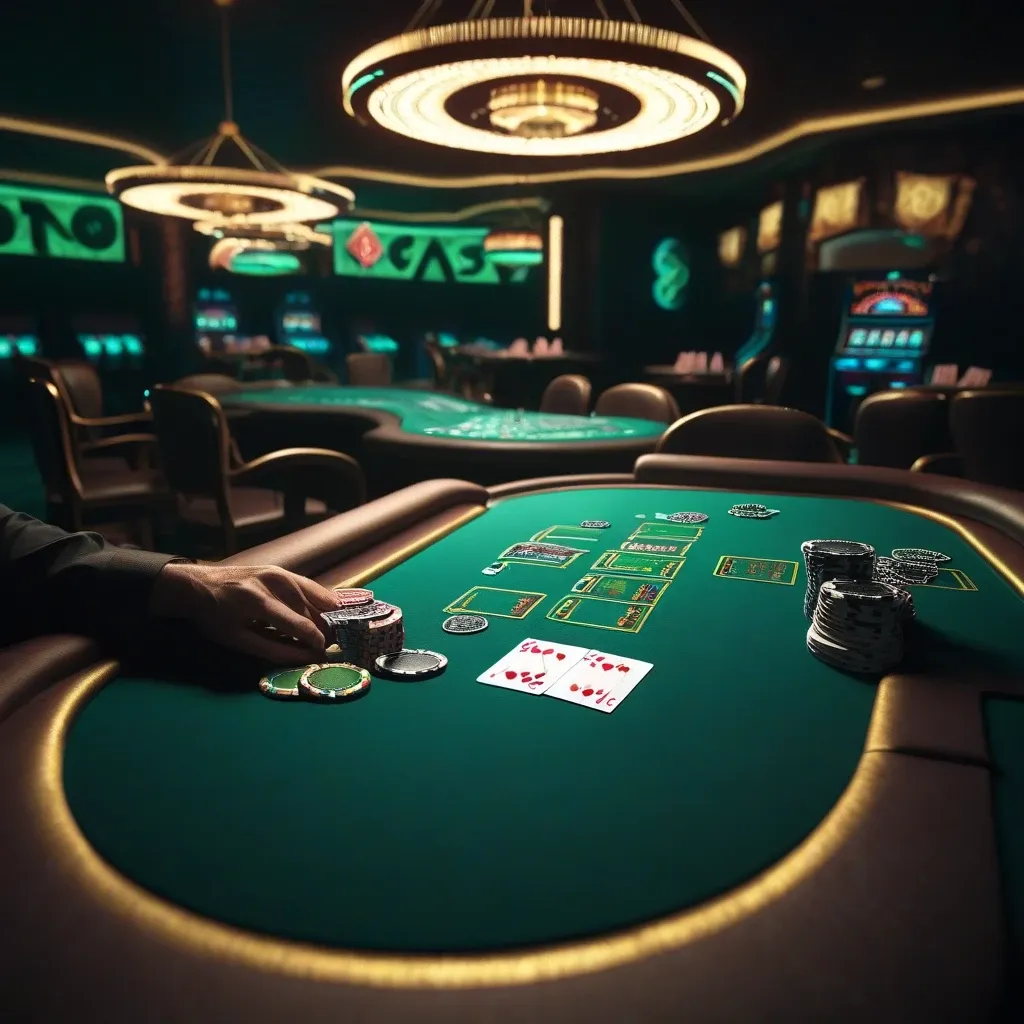
Let’s cut the math talk for a minute. Sure, the house edge is real, and the return-to-player percentages are printed for a reason. But people don’t walk into a casino with a spreadsheet. They walk in with a mood, a craving, maybe a bit of leftover stress from the office. The real value of a game isn’t found in the payout table—it’s found in the atmosphere, the rhythm, the way your brain shifts gears. Slots and tables are two completely different entertainment ecosystems. One is a solitary, hypnotic escape. The other is a noisy, social arena where high-fives and groans ripple across the felt. Knowing which one matches your current psychological state transforms a potentially disappointing session into a genuinely satisfying experience. No judgment here—just a honest look at what each style delivers.
The Immersive Escape of Slot Machines
Slot machines are engineered to hijack your attention in a friendly, predictable way. Think of the old Skinner box experiments—press a lever, get a reward, but not every time. That unpredictable reinforcement is the secret sauce. The lights flash, the reels spin, and the near-miss effect (two cherries and a blank) keeps your brain engaged long after you’d logically walk away. This isn’t a flaw—it’s a feature. For the person who’s spent all day making decisions, negotiating, and being “on,” a slot machine offers a rare chance to turn the brain off. No small talk, no strategy, no pressure. Just a repetitive, colorful flow that melts stress. It’s a legitimate form of entertainment, a sensory cocoon, and for many, the only way to truly unwind without social obligations.
The Social Thrill of Table Games
Then there’s the craps table—the loudest, most communal spot in any casino. Strangers become teammates for a few rolls, celebrating a hot shooter or groaning together at a seven-out. Blackjack dealers call out your bet, players make side bets, and the table banter becomes part of the show. Poker tournaments, even low-stakes ones, are a different beast—it’s you against a room of personalities, reading tells, bluffing, sharing laughs over a bad beat. The social learning curve is real. New players often freeze up, worried about hand signals, tipping etiquette, or slowing the game. But here’s the secret: seasoned players remember their own first awkward hand. The shared experience of figuring it out together is part of the reward. That one moment when the whole table erupts because you all beat the dealer? That’s the kind of memory no slot machine can manufacture.
Aligning Your Play Style with Your Goal
Be honest with yourself before you sit down. If the goal is to mentally check out, to let the world fade into a blur of spinning reels and chimes, a high-volatility slot with a low minimum bet can stretch a $100 bill into hours of immersive escape. But if you want to feel sharp, to test your nerve, and to stretch your bankroll with actual decisions, a $5 blackjack table offers a far better economic experience. One is a cozy blanket, the other a sparring match. Pick the right tool for the job, and you’ve already won the entertainment battle.
Bankroll and Budget: Which Game Suits Your Wallet?
Your wallet isn’t just a leather pouch—it’s a battlefield, and every game in the casino is a different kind of ambush. The minimum bet you see on a machine or table is only the surface layer; the real conversation is about the burn rate, the speed at which your cash evaporates whether you’re winning or losing. A penny slot might look like a harmless way to kill time—$0.01 per spin, right? But that low barrier feeds a machine that chews through $20, $30, sometimes $50 an hour when you account for the average spin speed and the house’s ruthless 10% edge. Meanwhile, a $5 blackjack table feels like a bigger commitment, yet with disciplined basic strategy, the edge drops to half a percent or less. That means your $5 hand actually costs you pennies in theoretical loss, keeping your bankroll alive far longer. The hidden trap? Table games punish mistakes—drinking, learning on the fly, tilting after a bad beat—all of which can skyrocket that hourly cost. So before you sit down, ask yourself: do you want a slow bleed or a controlled burn?
The Low Barrier to Entry of Slots
Penny slots are the ultimate siren song for the low budget gambler. You can walk in with $20, and the machine will let you spin for a cent. That’s cheap casino games at face value. But the trap is volume: at 10 spins per minute, you’re burning through 600 spins an hour. Even at a 10% house edge, that’s a $6 loss on a $20 stake—if you’re lucky. Most players lose faster because they max out lines or chase bonuses. A smart slot budget strategy is to set a strict session time limit (30 minutes) and a win goal (double your buy-in). When you hit either, walk. Otherwise, the machine’s edge will always grind you down.
Why Higher Minimums Can Be a Bargain
Here’s the counter-intuitive math that flips everything upside down: a $10/hand blackjack game, played with perfect basic strategy, carries a house edge of just 0.5%. That means your expected loss per hand is a measly 5 cents. In an hour, at 60 hands, you’re statistically losing $3. Compare that to a penny slot spinning at 10% edge—that’s $60 in expected loss for the same time. Yes, the high minimum bet strategy feels riskier, but it’s actually a bargain for your bankroll. The catch? You need to know basic strategy cold. Use a baccarat minimum bet or blackjack bankroll approach: divide your total session budget by 50 units to ensure you can survive variance. This is your ‘aha moment’: bigger bets don’t always mean bigger losses.

The Best of Both Worlds: Video Poker and Hybrid Machines
It’s the quiet corner of the casino floor most people walk right past. Video poker. Looks like a slot machine, but plays like a table game. That’s the trick. You get the solitude of a screen, the low minimums, and zero pressure from a dealer. But you also get real player agency—you choose which cards to hold, and the house edge can drop to almost nothing. In fact, with optimal play on a 9/6 Jacks or Better machine, the return to player (RTP) sits at 99.54%. That puts it among the best odds in the entire casino. For the savvy solitary player, this is the overlooked champion of value. No crowds, no smoke signals, just you and a fixed pay table that doesn’t change. Hybrid machines like this blend the best of both worlds: the calm of a slot and the control of a table game. Most people don’t know it exists. That’s why it’s your secret weapon.
What Is Video Poker and Why Doesn’t Everyone Play It?
Don’t let the name scare you. Video poker is far simpler than table poker. You get five cards, you decide which ones to keep, and the machine replaces the rest. That’s it. The goal is to form a winning poker hand, and the payouts are printed right on the screen. The reason most people skip it? They think it’s complicated. It’s not. One non-negotiable strategy tip: always look for a 9/6 Jacks or Better machine. That means the full house pays 9 coins, and the flush pays 6. That pay table is the industry standard for a 99.54% RTP. If you see an 8/5 machine, walk away. Video poker pay tables vary wildly, and knowing the difference between Deuces Wild and Jacks or Better is half the battle.
Why It Attracts the Savvy Solitary Player
You want deep focus. You want autonomy. You don’t want a dealer breathing down your neck or a crowd cheering over your shoulder. Video poker is the perfect middle path. It gives you the strategic depth of a card game without the social pressure. You can play at your own pace, think through every hold, and never feel rushed. It’s the ultimate solo gambling strategy—no small talk, no side bets, just you and the machine. If you’ve been torn between the low house edge of blackjack and the ease of slots, this is your home. Video poker is the quiet champion of the casino floor, and it’s waiting for you.
Making Your Choice: A Practical Decision Framework
You’ve absorbed the pros, the cons, the odds, and the vibes. Now it’s time to apply everything. This isn’t theory—it’s a mental shortcut you can use the moment you walk into the casino. Forget overthinking. Here’s how you decide, fast, and with confidence.
The 4-Question Decision Matrix
Run through these four questions in order. Your answer at the end tells you exactly where to plant yourself. No fluff, no second-guessing.
1. What’s your goal?
Profit-driven? Head to tables and video poker—they offer the best odds and skill-based edges. Just want entertainment, lights, and a few drinks? Slots win.
2. Social or solo?
Craving banter, high-fives, and dealer interaction? Tables are your scene. Prefer silence, headphones, and your own pace? Slots or video poker keep you in your bubble.
3. Willing to study?
Yes, you’ll memorize basic strategy charts or learn poker ranges? Blackjack, poker, and video poker reward the homework. No interest in studying? Stick with slots or baccarat—pure luck, zero prep.
4. What’s your bankroll?
Under $100? Slots or video poker stretch your money with low minimums. $100 or more? Tables open up—blackjack, craps, roulette become viable.
Your cheat-sheet flow: Profit → Tables. Social → Tables. Study → Blackjack/Poker/Video Poker. Bankroll under $100 → Slots/Video Poker. Mix and match—your personality, your choice. This is your casino decision guide, built for smart play.
Conclusion: Play the Game, Not the Numbers
So here’s the raw truth carved out of all that math: slots hand you a quick escape into pure, brain-off simplicity, while tables dish out layered skill and real social buzz. The “best” game? It’s the one that pulls you back to the seat with a grin, not a spreadsheet. Let the numbers whisper in your ear, sure—but let your own fun be the loudest voice in the room. Know yourself cold: play smart, stay in control, and treat every dollar as the cover charge for a few hours of entertainment. That’s the only win that matters. Thanks for sticking around—come back soon for more straight-up strategic insights.